Michigan’s Budget Breakdown and New Tax Credit for Affordable Housing
By: Mike Berkowitz
On July 3, the final day of session before its summer recess, Michigan’s legislature passed a state budget for Fiscal Year 2027, along with more than 60 policy bills, all of which have now been signed into law by the Governor. The overall budget was cut considerably compared to previous years, due to dramatically reduced state revenue. While there was less funding to go around this year, there are a handful of key positive outcomes that Elevate and our coalition partners worked hard to help secure.
Top Budget Outcomes: Water Affordability, Clean Energy Grants, and Contractor Workforce Development
First and foremost, the budget included $5 million for the Department of Health and Human Services (DHHS) to help people pay their water bills and prevent them from being shut off. While this is far short of the $60 million our coalition was asking for, it was a major achievement to get any water affordability funding in this budget, which is more important than ever before, given the increasingly frequent extreme heat events we’ve been experiencing.
The budget also included $5 million for the Michigan Public Service Commission (MPSC) to administer a new cycle of its renewable energy and electrification grant program. A previous iteration of this program awarded a grant to one of our projects helping the City of Ann Arbor decarbonize the Bryant Neighborhood. The program also funded Elevate and our partners at 5 Lakes Energy to develop a Michigan-specific cost-benefit analysis tool for performing energy efficiency and electrification projects in buildings.
Last but not least, the budget included over $4 million for the Department of Environment, Great Lakes, and Energy (EGLE) to provide wraparound services, training, and certification of residential energy contractors. This authorizes grant funding from the federal Department of Energy to support the State of Michigan’s Home Energy Rebates program (MiHER).
Top Policy Outcome: Supercharging Affordable Housing Development
In tandem with the budget negotiations, Michigan’s legislature also passed more than 60 policy bills on its last day of session before going on summer break. The most important ones for Elevate and our advocacy partners were House Bills 5806, 5807, and Senate Bill 966.
This three-bill package establishes the Michigan Housing Opportunity Tax Credit – a state version of the federal Low-Income Housing Tax Credit (LIHTC). Beginning in 2027, Michigan’s State Housing Development Authority (MSHDA) will launch this program designed to boost and amplify the benefits of the federal tax credit, projected to create an additional 2,500 affordable housing units every year.
This will also result in more energy-efficient and renewable-powered affordable housing developments because MSHDA rewards developers for achieving green building certifications in their tax credit evaluation process.
Prior to this legislation, Michigan was the only state in the Midwest that hadn’t established any state tax incentive or policy to specifically boost and amplify the federal credit.
Items Cut from the Budget: Geothermal Energy, Reducing Rural Heating Bills, and Lead Abatement Training
Due to Michigan’s legislature being divided between political parties and the overall reduction in state revenue stemming from H.R. 1, the budget negotiations were very tight. As such, many items were cut from the final budget and legislative packages.
The Michigan Senate initially proposed $3 million to establish a revolving loan fund to support the development of geothermal energy networks across the state. But unfortunately, the final round of negotiations didn’t survive, and we’ll have to try again next year.
Elevate and our partners at the Michigan Alliance for Sustainable and Healthy Homes requested $10 million to help reduce energy costs for rural Michiganders who heat their homes with propane and other delivered fuels. We also advocated for $12 million to certify more lead abatement contractors and incentivize their participation in state programs. Unfortunately, we could not secure funding for either proposal, but we plan to pursue them again next year.
Have questions or want to get involved with Elevate’s advocacy efforts in Michigan? Email Mike.Berkowitz@ElevateNP.org.
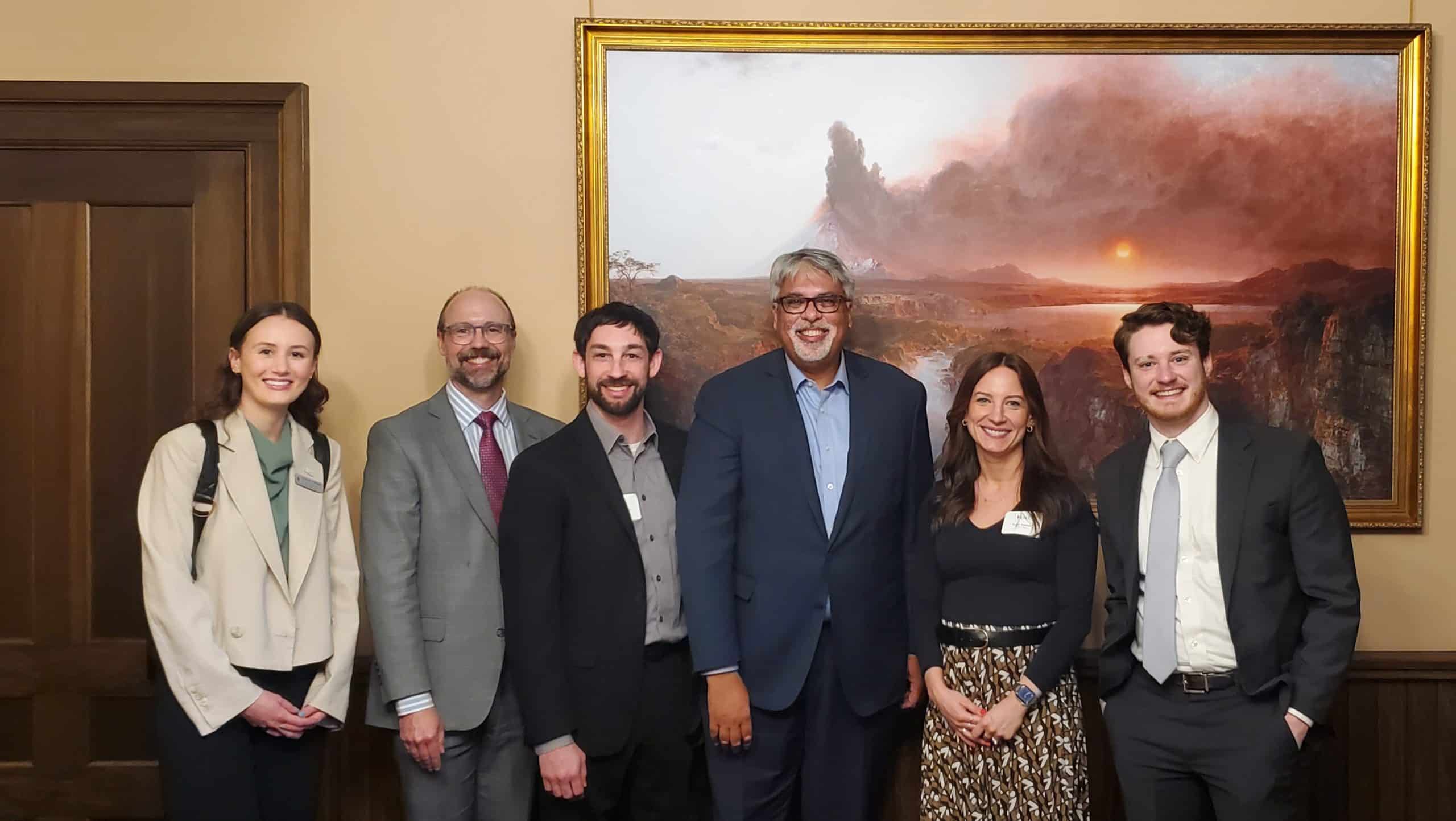
Photo: Mike Berkowitz, Elevate’s Michigan Policy Director, pictured with Michigan State Senator Sam Singh from East Lansing.
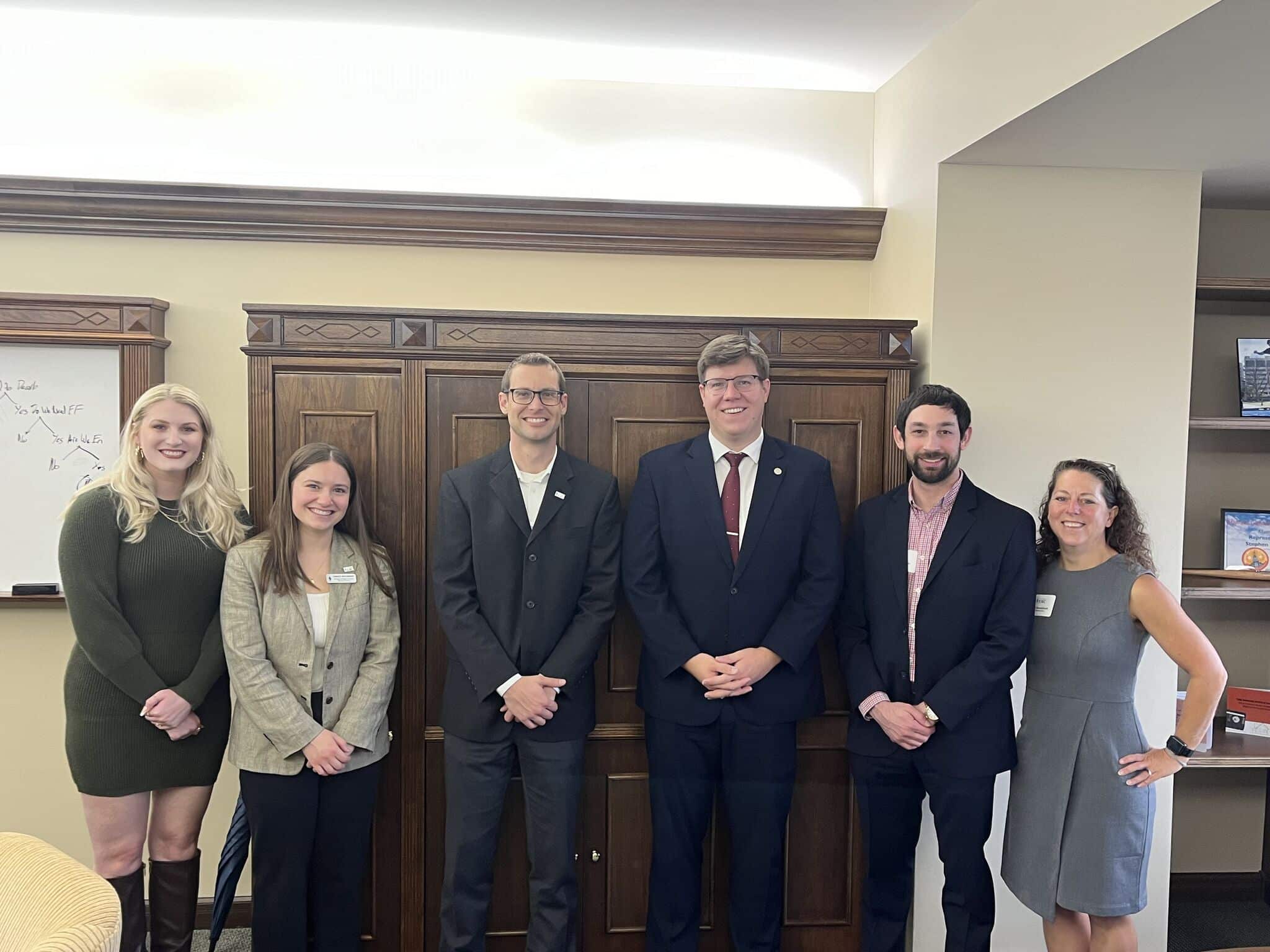
Photo: Mike Berkowitz, Elevate’s Michigan Policy Director, pictured with Michigan State Representative Stephen Wooden from Grand Rapids.